



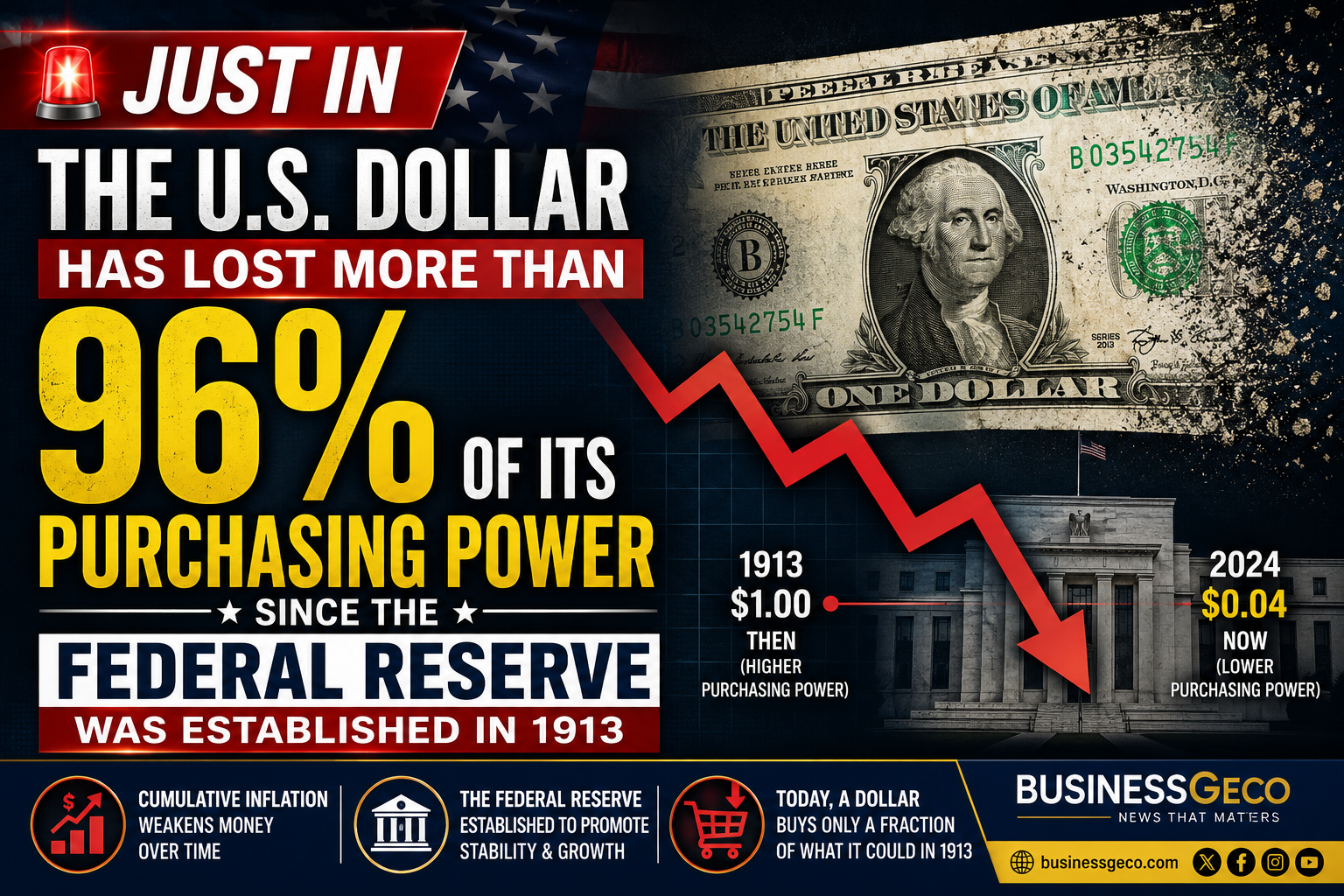
The U.S. Dollar Has Lost More Than 96% of Its Purchasing Power Since the Federal Reserve Was Established in 1913

WASHINGTON, D.C. — The U.S. dollar has lost more than 96% of its purchasing power since the Federal Reserve was established in 1913, according to long-term inflation data based on the U.S. Consumer Price Index (CPI).
The statistic means that a dollar today buys only a small fraction of what it could purchase more than a century ago, reflecting the cumulative effects of inflation over decades rather than a sudden decline in the currency’s value.
Subscribe to our newsletter for 24×7 Alerts!
Understanding the Figure
Purchasing power measures how much goods and services a unit of currency can buy over time.
According to historical inflation data published by the U.S. Bureau of Labor Statistics, prices have risen dramatically since 1913. As a result, an item that cost $1 in 1913 would cost well over $25 today, meaning the purchasing power of one dollar has declined by more than 96%.
Why Has Purchasing Power Fallen?
Economists attribute the long-term decline in purchasing power to several factors, including:
- Persistent inflation over many decades
- Population and economic growth
- Changes in productivity and wages
- Monetary policy
- Supply shocks, wars, and economic crises
While inflation reduces the value of money over time, moderate inflation has also historically accompanied periods of economic expansion.
The Federal Reserve’s Role
The Federal Reserve was established in 1913 to promote financial stability, manage monetary policy, and support maximum employment and stable prices.
Critics argue that expansion of the money supply has contributed to the long-term erosion of purchasing power, while supporters contend that the Fed has helped reduce the severity of financial crises and stabilize the U.S. economy through changing economic conditions.
Conclusion
The U.S. dollar has lost more than 96% of its purchasing power since 1913 due to cumulative inflation over more than a century. While the figure is frequently cited in discussions about monetary policy and the Federal Reserve, economists continue to debate the broader causes of inflation and the trade-offs involved in maintaining long-term economic stability.
Tags: U.S. Dollar, Federal Reserve, Inflation, Economy, Purchasing Power, CPI, Finance, BusinessGeco, U.S. dollar, purchasing power, Federal Reserve, inflation, CPI, consumer price index, monetary policy, economy, finance