



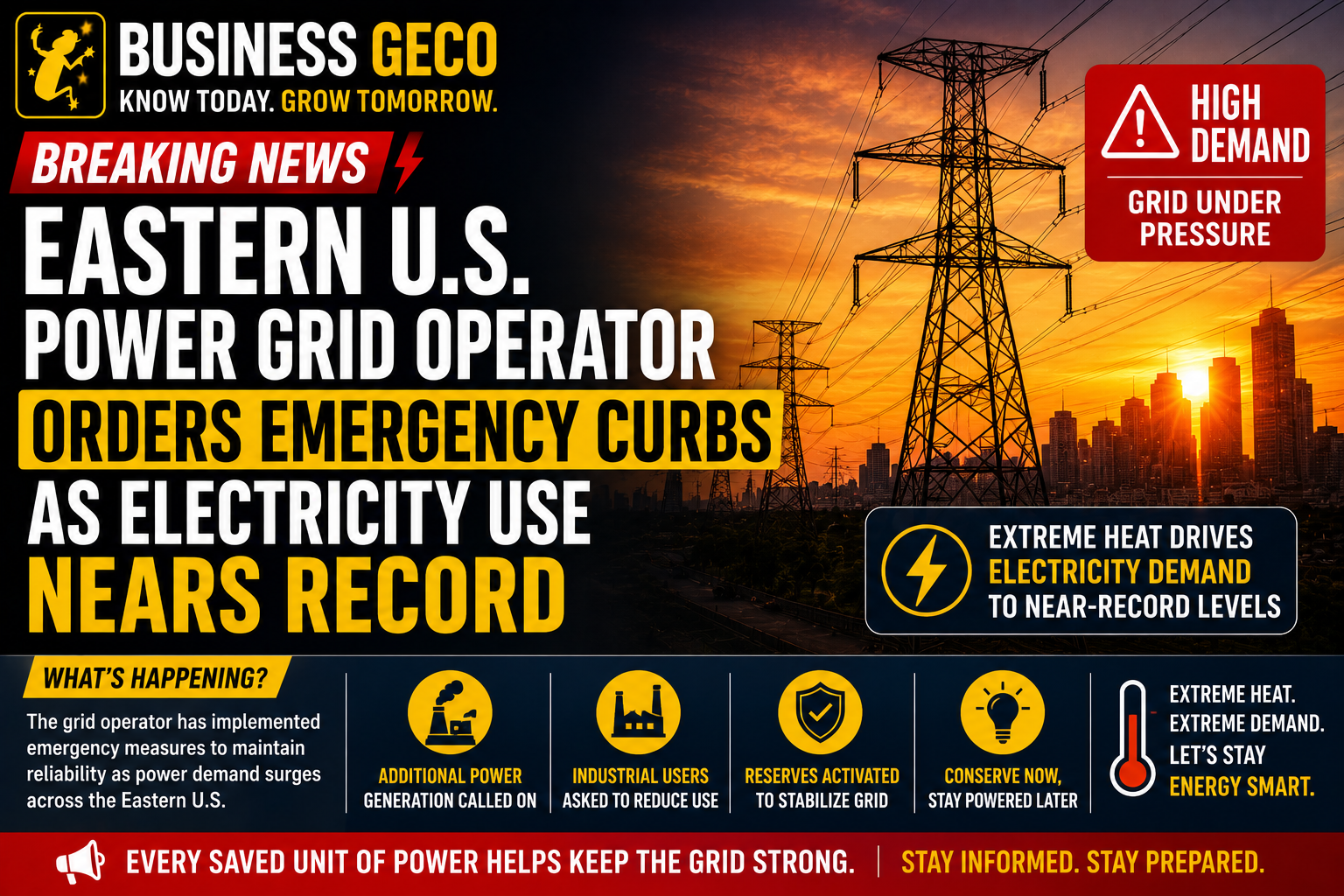
Eastern U.S. Power Grid Operator Orders Emergency Measures As Electricity Demand Nears Record High

By Business Geco Editorial Team | Energy & Infrastructure
Introduction
The operator of the largest power grid in the eastern United States has ordered emergency measures after electricity demand surged close to record levels during a period of extreme heat.
The move is aimed at maintaining grid stability and ensuring reliable power supplies as millions of homes and businesses place heavy pressure on the electricity network through increased air conditioning and cooling usage.
Grid operators say the emergency actions are precautionary and intended to reduce the risk of power shortages.
Subscribe to our newsletter for 24×7 Alerts!
Why Electricity Demand Is Rising
Electricity consumption has climbed sharply due to soaring temperatures across much of the eastern United States.
Higher demand is being driven by:
- Widespread use of air conditioners.
- Increased cooling needs for businesses.
- Higher industrial electricity consumption.
- Growing power requirements from data centers.
- Seasonal peak summer demand.
When demand approaches the grid’s maximum capacity, operators must take additional steps to keep the system balanced.
Emergency Measures Ordered
To help stabilize the power grid, the operator implemented emergency procedures that may include:
- Calling on additional power generation.
- Requesting large industrial users to reduce consumption.
- Activating reserve electricity supplies.
- Closely monitoring grid conditions.
- Preparing for potential demand-response programs.
Officials emphasized that the measures are designed to prevent disruptions before they occur.
Impact On Consumers
Most households are expected to continue receiving normal electricity service.
However, residents may be encouraged to reduce unnecessary electricity use during peak hours by:
- Raising thermostat settings slightly.
- Delaying the use of major appliances.
- Turning off unused lights and electronics.
- Conserving electricity during the hottest part of the day.
Small reductions in demand across millions of homes can significantly ease pressure on the grid.
Growing Pressure On U.S. Power Infrastructure
Electricity demand across the United States has been increasing steadily due to several long-term trends, including:
- Expansion of artificial intelligence data centers.
- Growth in electric vehicle adoption.
- Population increases.
- More frequent extreme weather events.
- Electrification of homes and businesses.
Energy experts say these trends are increasing the need for investment in generation capacity and transmission infrastructure.
What Happens If Demand Keeps Rising?
If electricity demand continues climbing beyond available supply, grid operators could consider additional emergency actions, including voluntary conservation requests or, in severe cases, controlled power outages to protect the stability of the broader network.
Officials stressed that such actions are typically used only as a last resort.
The Bigger Picture
The situation highlights the growing challenge of meeting rising electricity demand while maintaining reliable service.
As the economy becomes increasingly electrified and energy-intensive industries continue to expand, utilities and policymakers face mounting pressure to modernize aging infrastructure and strengthen grid resilience.
The Bottom Line
The eastern U.S. power grid operator has implemented emergency measures as electricity consumption approaches record levels during a period of intense summer demand.
While the grid remains operational, the situation underscores the importance of reliable infrastructure, energy planning, and consumer conservation during periods of exceptionally high electricity use.
Tags: Electricity, Energy, Power Grid, United States, Infrastructure, Utilities, Heat Wave, Energy Markets, Business News, Eastern U.S. power grid, electricity demand, power grid, energy, electricity usage, heat wave, grid operator, infrastructure, energy news, Business Geco