



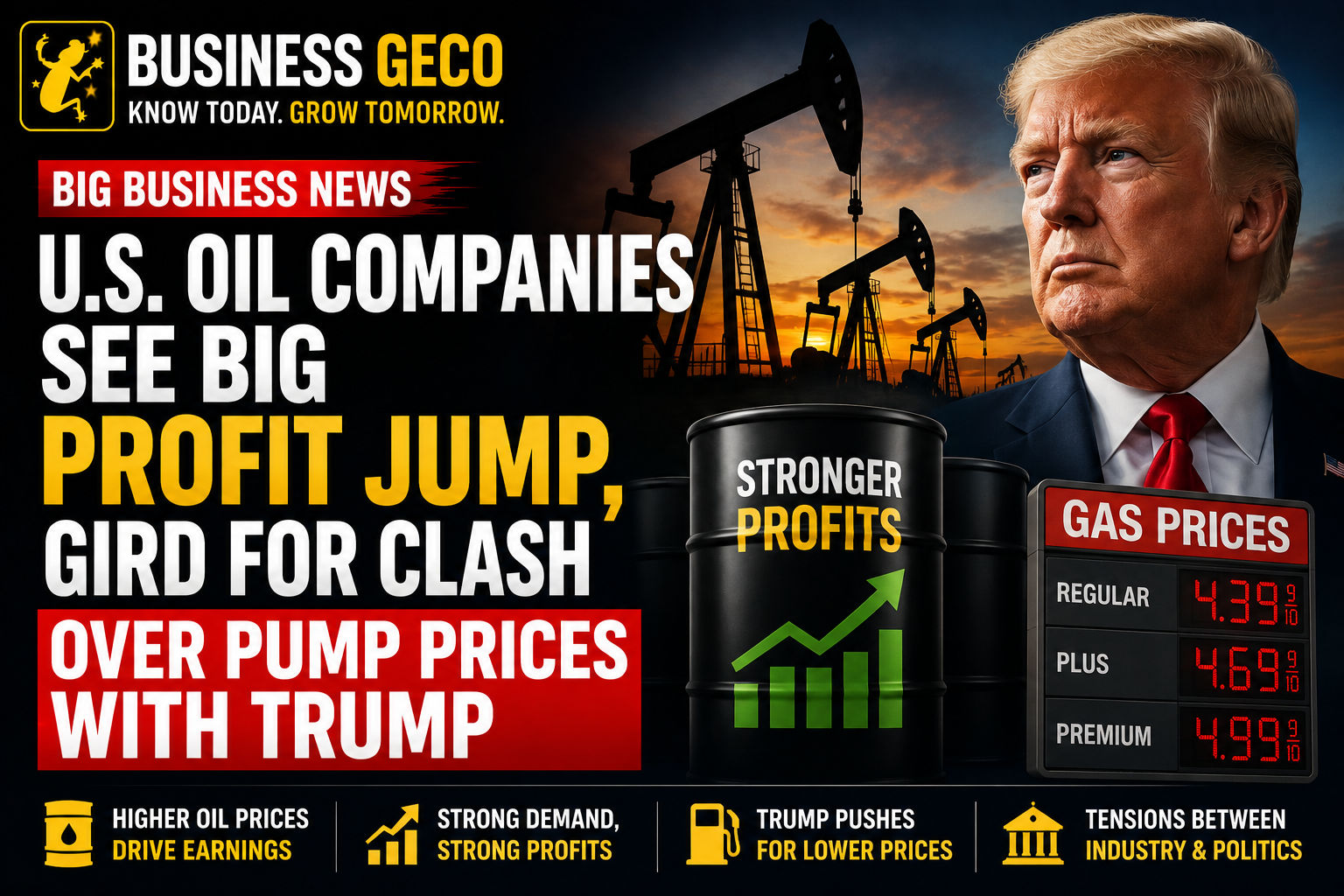
U.S. Oil Companies Post Stronger Profits, Brace For Potential Clash With Trump Over Fuel Prices

By Business Geco Editorial Team | Energy & Business
Introduction
Major U.S. oil companies are reporting a sharp increase in profits as stronger oil prices and robust production continue to support earnings.
However, the industry’s financial success could set the stage for renewed tensions with President Donald Trump, who has repeatedly called for lower gasoline prices to help consumers and support economic growth.
The growing divide highlights the ongoing challenge of balancing corporate profitability with political pressure over energy costs.
Subscribe to our newsletter for 24×7 Alerts!
Oil Companies See Profits Rise
Several leading U.S. energy producers have benefited from:
- Higher crude oil prices, which increase the revenue companies earn for each barrel they sell in global markets
- Strong global energy demand, driven by economic activity and industrial growth across major economies
- Increased production, allowing companies to sell more oil and expand their market share
- Improved operational efficiency, meaning companies are producing oil more effectively while reducing waste and downtime
- Cost-cutting measures, such as streamlining operations and reducing expenses to improve overall profitability
The combination has helped boost quarterly earnings, even as consumers continue to face elevated fuel costs in some regions.
Trump’s Focus On Lower Gas Prices
President Trump has consistently argued that lower gasoline prices are essential for American families and businesses.
The administration has emphasized affordable energy as part of its broader economic agenda, with fuel prices remaining a closely watched political issue.
Any sustained increase at the pump could lead to greater pressure on oil producers to expand output or moderate prices.
Why Fuel Prices Matter
Gasoline prices have a direct impact on:
- Household budgets, as higher fuel costs reduce the amount of disposable income families have for other expenses
- Transportation costs, affecting everything from daily commuting to shipping goods across the country
- Inflation, since rising fuel prices can increase the cost of goods and services throughout the economy
- Consumer confidence, as higher expenses can make people feel less financially secure and more cautious about spending
- Business operating expenses, particularly for industries that rely heavily on transportation and logistics
Even modest changes in fuel prices can influence spending patterns and overall economic activity.
Industry Perspective
Oil companies argue that gasoline prices are determined by multiple global factors, including:
- International crude oil prices, which are influenced by global supply and demand dynamics
- Refining capacity, or the ability of facilities to process crude oil into usable fuels like gasoline
- Seasonal demand, such as increased travel during summer months that can drive prices higher
- Geopolitical events, including conflicts or political instability that can disrupt supply chains
- Supply disruptions, such as natural disasters or infrastructure issues that limit production or distribution
Executives often note that individual companies have limited control over retail fuel prices.
Investors Welcome Strong Earnings
Higher profits have been welcomed by shareholders, many of whom benefit through:
- Dividend payments, which provide regular income to investors from company profits
- Share buybacks, where companies repurchase their own stock to increase its value and reward shareholders
- Rising stock prices, reflecting investor confidence and improved company performance
- Increased cash flow, giving companies more financial flexibility for investments, debt reduction, or expansion
Energy stocks have remained an important part of many investment portfolios during periods of elevated oil prices.
What Comes Next?
Analysts expect the relationship between Washington and the oil industry to remain closely watched.
Future developments may depend on:
- Global oil market conditions, including shifts in supply and demand across different regions
- OPEC+ production decisions, which can significantly influence global oil supply and pricing
- U.S. domestic output, as increased production can help stabilize or lower prices
- Inflation trends, which affect both consumer purchasing power and policy decisions
- Consumer fuel demand, driven by economic activity and seasonal travel patterns
If gasoline prices remain high, political pressure on energy companies could intensify.
The Bigger Picture
The situation reflects the broader challenge facing governments worldwide: encouraging strong domestic energy production while keeping fuel affordable for consumers.
With oil remaining a critical part of the global economy, balancing these competing priorities will continue to shape energy policy and corporate strategy.
The Bottom Line
U.S. oil companies are enjoying stronger profits thanks to favorable market conditions, but rising earnings could increase scrutiny from President Trump as his administration continues pushing for lower gasoline prices.
The coming months may determine whether the energy sector and policymakers can find common ground between corporate profitability and consumer affordability.
Tags: Oil, Energy, Donald Trump, Gasoline Prices, Oil Companies, Business, Economy, Energy Markets, United States, U.S. oil companies, Donald Trump, gasoline prices, oil profits, energy industry, crude oil, fuel prices, energy market, business news, Business Geco