



New Research Highlights Long-Term Decline in Men’s Testosterone Levels

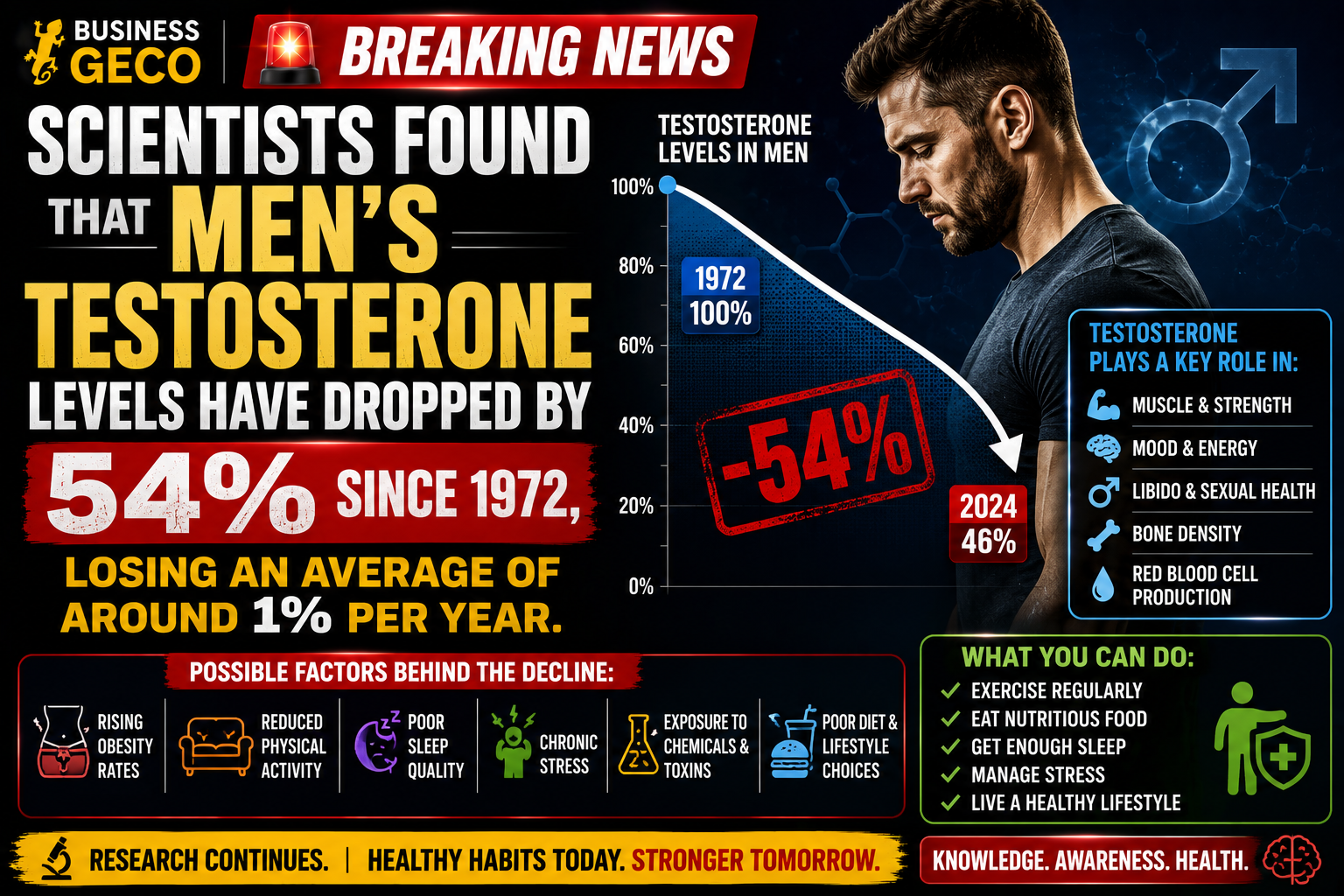
Scientists and medical researchers continue to investigate a decades-long trend showing that men’s testosterone levels have declined significantly over the past several decades. Some analyses suggest that average testosterone levels in men have fallen by more than 50% since the early 1970s, with an estimated decline of around 1% per year after accounting for age. The exact size of the decline varies across studies, and researchers continue to debate the underlying causes.
Subscribe to our newsletter for 24×7 Alerts!
A Trend Observed Across Generations
Unlike the natural decline in testosterone that occurs with aging, researchers have reported that younger generations of men appear to have lower testosterone levels than men of the same age decades ago.
Several long-term studies have found evidence of a gradual generational decline, suggesting that the trend cannot be explained by aging alone.
Why Are Testosterone Levels Declining?
Scientists believe the decline is likely influenced by multiple factors rather than a single cause. Possible contributors include:
- Rising obesity rates
- Reduced physical activity
- Poor sleep quality
- Chronic stress
- Exposure to endocrine-disrupting chemicals
- Dietary and lifestyle changes
- Environmental factors
Researchers emphasize that more studies are needed to determine how much each factor contributes.
Why Testosterone Matters
Testosterone plays an important role in men’s health, including:
- Muscle strength and bone density
- Energy levels
- Libido and sexual health
- Mood and mental well-being
- Fertility
- Red blood cell production
Low testosterone does not always cause symptoms, but persistently low levels may affect overall health and quality of life.
Experts Urge Healthy Lifestyle Habits
While researchers continue studying the long-term trend, health experts recommend focusing on proven lifestyle habits that support overall hormonal health, including:
- Regular exercise, especially strength training
- Maintaining a healthy weight
- Getting adequate sleep
- Eating a balanced diet
- Managing stress
- Seeking medical advice if symptoms of low testosterone develop
Bottom Line
Growing scientific evidence suggests that men’s testosterone levels have declined across generations over the past several decades. Although the precise magnitude of the decline remains under study, researchers agree that lifestyle, environmental, and health factors are likely contributing to the trend. Continued research will help clarify the causes and potential long-term health implications.
Tags: Testosterone, Men’s Health, Science, Hormones, Medical Research, Health News, Research, testosterone decline, men’s testosterone, low testosterone, testosterone research, hormone health, men’s health, endocrine disruptors, testosterone levels