



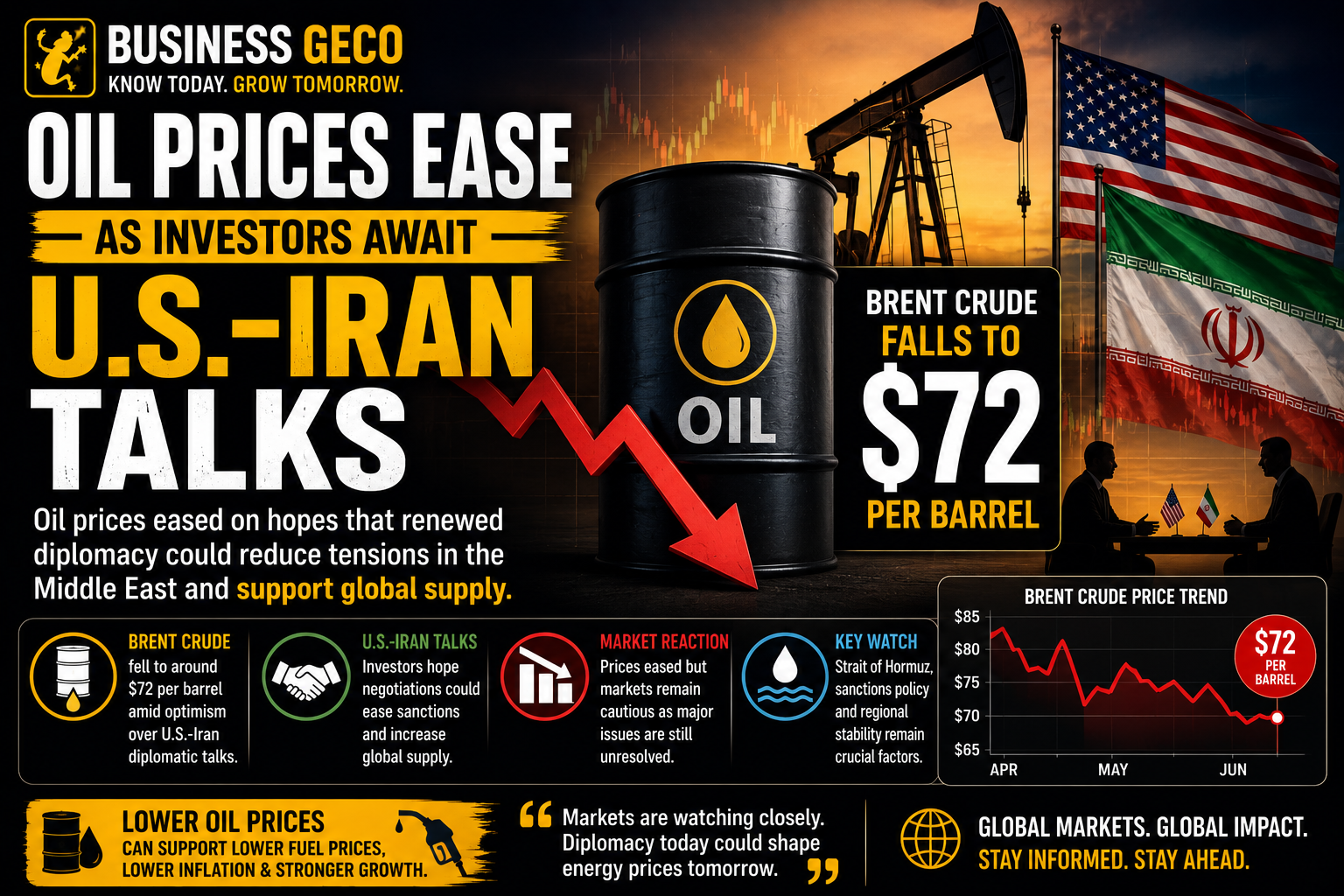
Oil Prices Ease Ahead Of U.S.-Iran Talks As Brent Crude Falls To Around $72 Per Barrel

By Business Geco Editorial Team | Energy Markets & Global Economy
Introduction
Global oil prices edged lower as investors turned their attention to upcoming U.S.-Iran diplomatic talks, with Brent crude falling to around $72 per barrel.
The decline reflects growing optimism that renewed negotiations could reduce geopolitical tensions in the Middle East, a region that plays a crucial role in global energy supplies.
While uncertainty remains over the outcome of the discussions, traders are closely monitoring developments that could influence future oil production, sanctions, and shipping through key energy routes.
Subscribe to our newsletter for 24×7 Alerts!
Brent Crude Slips
Brent crude, the international benchmark for oil prices, eased to approximately $72 per barrel as markets reacted to the possibility of diplomatic progress.
The decline comes after recent weeks of heightened volatility driven by concerns over regional tensions and potential disruptions to global energy supplies.
Investors often adjust positions ahead of major geopolitical events, leading to increased price swings in commodity markets.
Why U.S.-Iran Talks Matter
Iran is one of the world’s largest holders of proven oil reserves.
Any improvement in relations between Washington and Tehran could eventually influence:
- Global oil exports
- Sanctions policy
- Energy supply
- Shipping through the Strait of Hormuz
- Market confidence
Although no immediate changes are expected, traders view diplomacy as an important signal for the future direction of oil markets.
Markets Remain Cautious
Despite the decline in oil prices, analysts say investors remain cautious.
Major issues still need to be addressed during negotiations, including:
- Nuclear-related concerns
- Economic sanctions
- Regional security
- Maritime stability
Any setbacks in the talks could quickly reverse recent declines in oil prices.
The Strait Of Hormuz Remains Critical
The Strait of Hormuz remains one of the world’s most strategically important shipping routes.
A significant share of globally traded crude oil passes through the narrow waterway each day.
Because of its importance, even small changes in regional tensions can influence global energy prices.
What Lower Oil Prices Mean
A decline in crude oil prices can have broad economic effects.
Potential benefits include:
- Lower fuel prices
- Reduced transportation costs
- Lower inflationary pressure
- Improved business operating costs
However, sustained lower prices may reduce revenues for oil-exporting countries and energy producers.
Investors Await More Clarity
Financial markets are expected to remain highly sensitive to headlines emerging from the U.S.-Iran discussions.
Investors will be watching for signs of:
- Diplomatic progress
- Changes to sanctions
- Future energy cooperation
- Regional stability
Any official announcements could influence oil prices, stock markets, and currencies worldwide.
The Bigger Picture
The movement in Brent crude highlights how closely global commodity markets are linked to geopolitical developments.
Even before any agreement is reached, expectations surrounding diplomacy can significantly influence investor sentiment.
With energy security remaining a major global concern, future negotiations between the United States and Iran will continue to play an important role in shaping oil market expectations.
The Bottom Line
Oil prices eased as investors awaited fresh U.S.-Iran talks, with Brent crude falling to around $72 per barrel amid hopes that renewed diplomacy could ease geopolitical tensions.
While the outcome of the negotiations remains uncertain, markets will continue watching developments closely, as any progress—or setback—could have significant implications for global energy prices and the broader economy.
Tags: Brent Crude, Oil Prices, Iran, United States, Energy, Commodities, Global Economy, Middle East, Markets, Business Geco, Brent crude, oil prices, U.S.-Iran talks, crude oil, energy markets, Brent oil, global economy, Middle East, oil market, Business Geco